Human Health Innovation
Amplify Human Health Discovery
MRI, whole-room calorimetry, human movement analysis, neurophysiology, functional stimulation, wearable sensing, and eye tracking.
Human Health Innovation brings together complementary technologies for studying the human body and brain across scales. Designed to support interdisciplinary research that connects high-performance imaging and physiology with movement, neural activity, metabolism, and behavior.
From controlled studies in the metabolic environment to dynamic assessments in the mobility laboratory, our facilities enable investigators to build multimodal protocols around a shared scientific question. Potential applications span neuroscience, rehabilitation, biomechanics, nutrition and metabolism, aging, human performance, assistive technologies, and translational health research.
Our Equipment
MRI & MRI Support
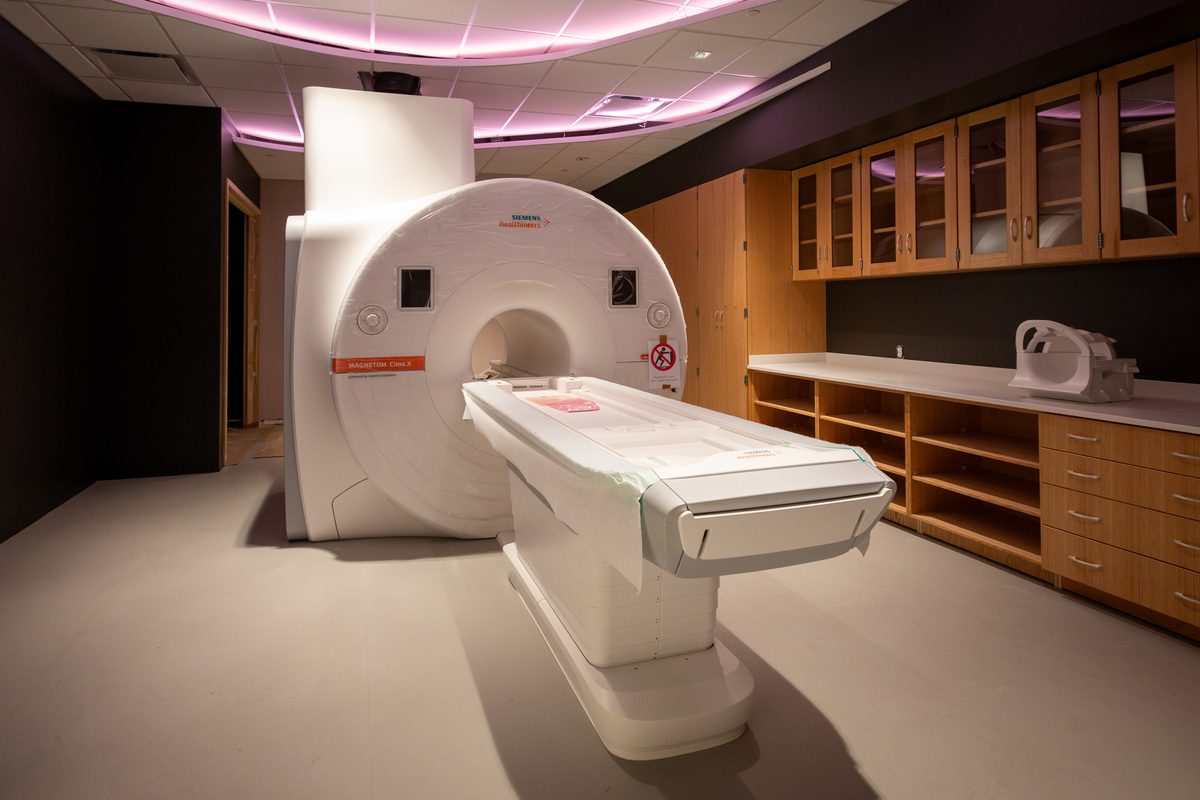
- Siemens MAGNETOM Cima.X 3T
- PST Vera Mock MRI Stimulator
- 60cm bore
- NordicNeuroLab ComfortSolution with in-room viewing device
- Current Designs Birch Optical Interface fORP system for fMRI research task responses
- BIOPAC respiratory, heart rate, and EDA monitoring
Whole-Room Calorimetry & Nutrition
Mobility, Wearable Sensing & Eye Tracking
- Marker-based motion capture system: Vicon ((Qty. 12) Vicon Vero v2.2 2.2 Megapixel optical camera @ 330 FPS featuring a varifocal lens (6 to 12 mm) and 850 nm IR LED strobe).
- Markerless system: Vicon Theia Markerless Kinematics System
- Wearable sensors: (e.g., Notch IMU, Samsung Galaxy Watch8)
- Eye-tracking system: Tobii Pro Glasses 3 wireless 100 Hz
- EMG: Coapt Bluetooth EMG system and Delsys Trigno wireless EMG
- Force plates
Neurotechnology & Neuromodulation
- EEG: g.Nautilus PRO FLEXIBLE 32 electrodes (wet EEG electrodes)
- fNIRS: NIRx NIRSport2 16x16
- Combined EEG/fNIRS caps
- FES : g.tec g.Estim (biphasic stimulation from ±1 to ±60 mA)
Core Capabilities
Supporting studies of human health and performance by integrating advanced imaging, metabolism, movement, neural activity, physiology, and behavioral assessment within a coordinated human-subject research environment.
Advanced 3T MRI
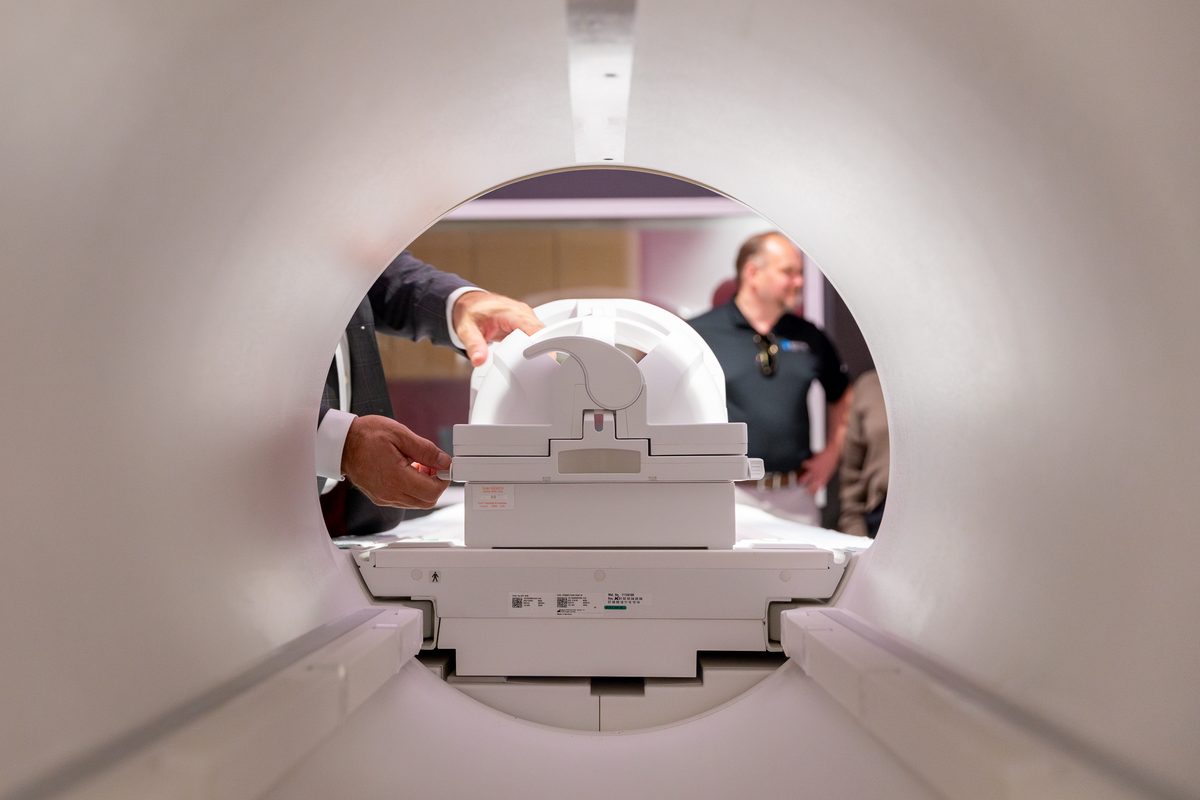
Siemens Healthineers MAGNETOM Cima.X
The Siemens Healthineers MAGNETOM Cima.X is an ultra-high-performance 3T MRI platform that supports advanced structural, functional, diffusion, spectroscopic, and quantitative imaging for human-subject research and clinical translation. Its Gemini gradient system delivers up to 200 mT/m gradient amplitude and 200 T/m/s slew rate per axis, enabling high-resolution imaging, advanced reconstruction methods, open research interfaces, and enhanced assessment of tissue microstructure.
Planned MRI support infrastructure includes Psychology Software Tools Vera mock MRI simulator for participant preparation and protocol familiarization. NordicNeuroLab ComfortSolution system with an in-room viewing device is available for fMRI stimulus presentation studies or assisting to increase a participant's comfort level while reducing their anxiety levels by providing a video or movie as an alternative focus for participants during their MRI exam. Current Designs Birch Optical Interface fORP system for fMRI research task responses and BIOPAC physiological monitoring for respiratory, heart rate, and electrodermal activity measurements.
Research Applications
- Structural and functional neuroimaging
- Diffusion and microstructural imaging
- Musculoskeletal and whole-body imaging
- Functional MRI studies with synchronized visual stimulus presentation
- Respiratory, heart rate, electrodermal activity, and psychophysiology monitoring during MRI protocols
Whole-Room Calorimetry & Nutrition
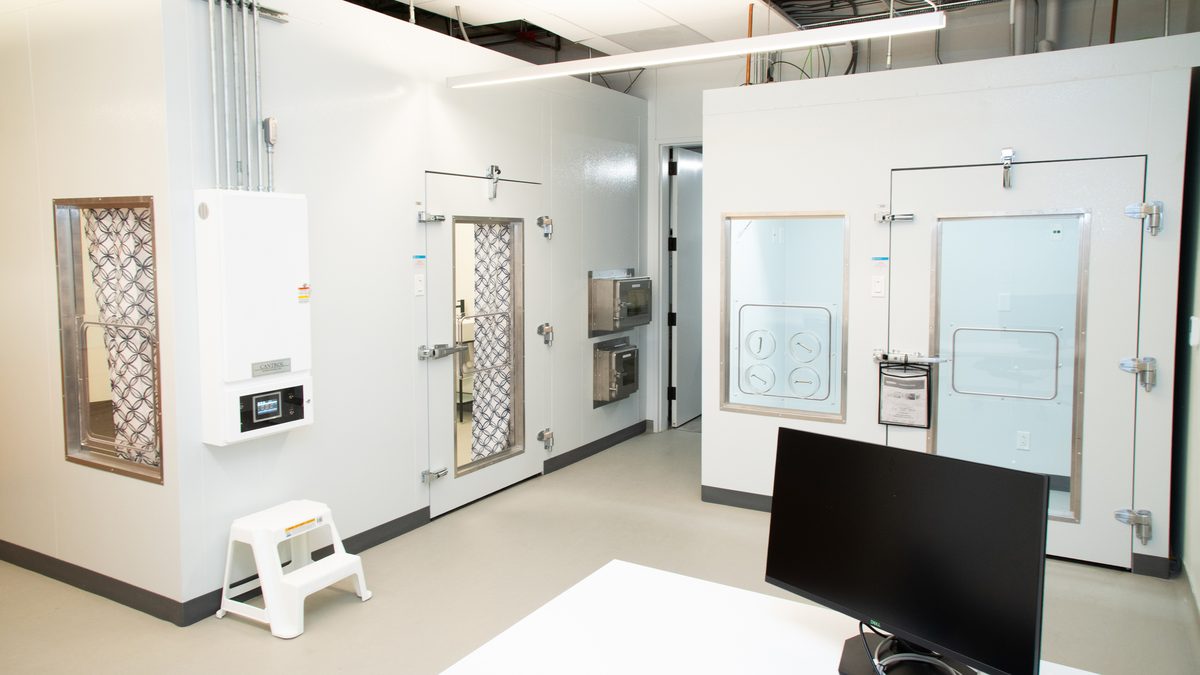
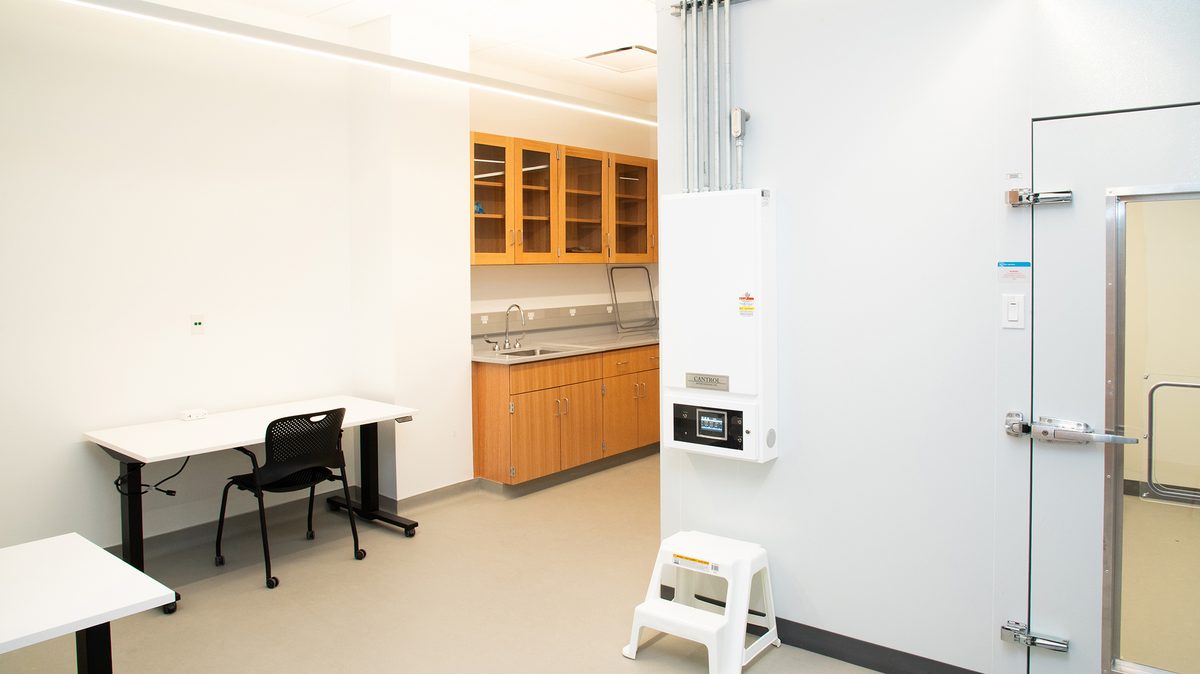
MEI Research main room and flex room
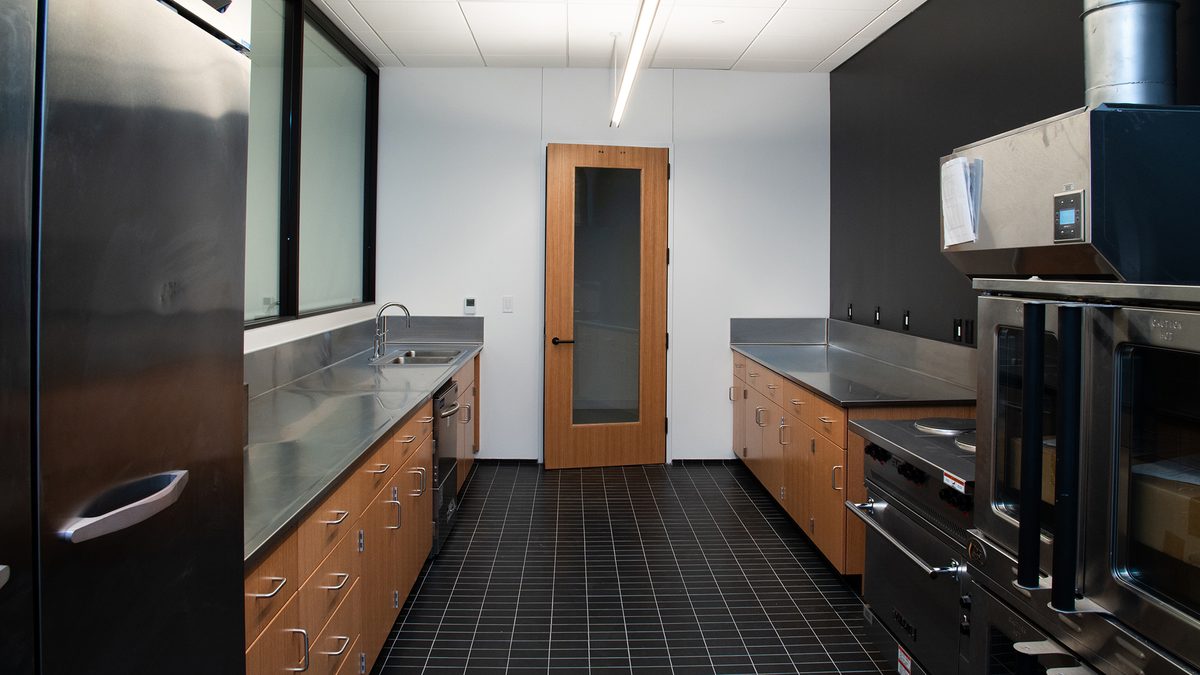
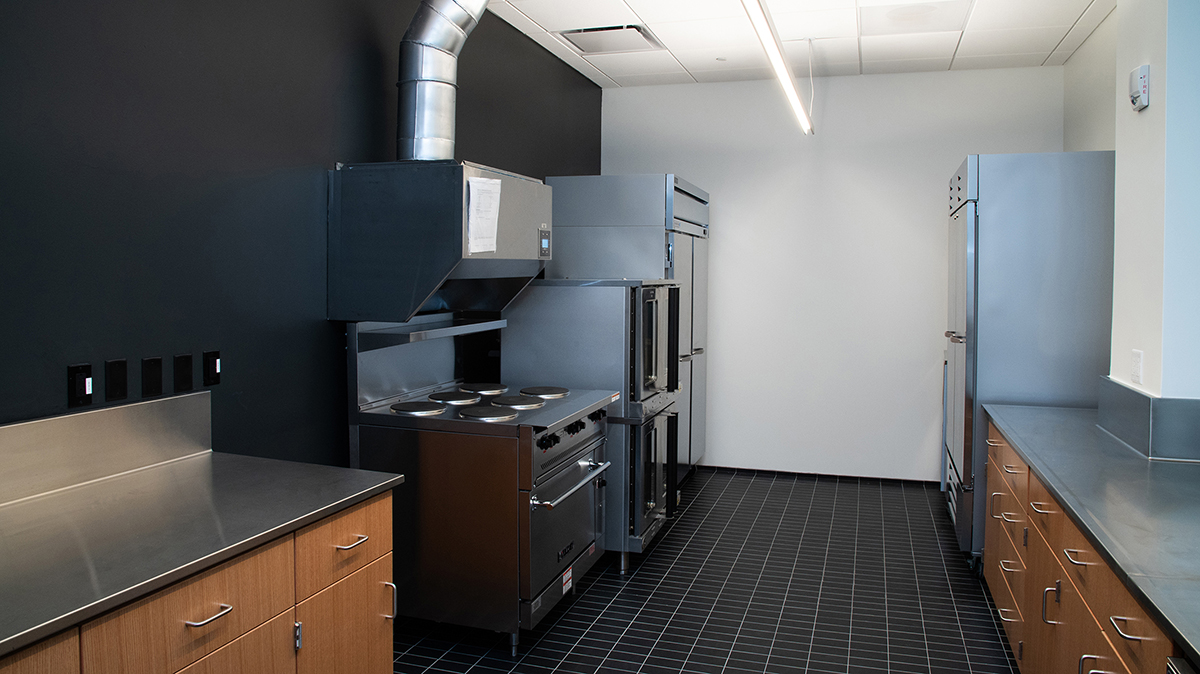
Room-scale indirect calorimetry continuously measures oxygen consumption and carbon dioxide production to estimate energy expenditure and substrate utilization while participants remain in a controlled environment. The main room can support longer protocols such as extended or 24-hour energy-expenditure studies, while the flex room can support shorter acute protocols such as resting energy expenditure, meal-response, or exercise-challenge studies. The metabolic kitchen supports precisely controlled meal preparation for diet, metabolism, and clinical nutrition research.
Research Applications
- Extended and 24-hour energy-expenditure studies
- Substrate utilization and metabolic responses
- Resting and sleeping energy expenditure
- Meal-response, diet-intervention, and exercise-challenge studies
- Diet, daily activity, sleep, and environmental interventions
- Controlled feeding and nutrition research
- Integration of calorimeter data with body composition, wearable, or other multimodal measures
Mobility & Biomechanics Laboratory
Vicon marker-based system plus markerless and wearable systems
Quantitative assessment of human movement using marker-based 3D optical motion capture, supplemented by markerless and wearable sensing for flexible laboratory and naturalistic tasks. The mobility lab enables the use of integrated motion capture, force/kinetic measures, EMG or other physiological signals, and wearable sensors to quantify kinematics, kinetics, muscle activity, gait variability, posture, and task performance. Our mobility lab can support studies of gait, rehabilitation, assistive and prosthetic technologies, sports and ergonomics, and multimodal protocols that synchronize movement data with neurophysiology, eye tracking, FES, and wearable activity measures.
Research applications
- Gait, posture, and joint kinematics
- Kinematic and kinetic analysis of walking, running, stair negotiation, transfers, and other functional tasks
- Rehabilitation and assistive-technology evaluation
- Prosthetic, orthotic, FES, and assistive-device evaluation
- Sports, ergonomics, and human performance
- Markerless and wearable-sensor studies for repeated assessment outside traditional marker-based workflows
- Synchronized movement, physiological, and neural measures
Neurotechnology & Neuromodulation
EEG/ fNIRS, FES, and standalone fNIRS systems
Integrated neurotechnology tools for measuring and modulating brain-body function during cognitive, motor, rehabilitation, and human-performance tasks. EEG provides high-temporal-resolution measurement of electrical brain activity, while fNIRS measures changes in cerebral oxygenation associated with cortical activation. Functional electrical stimulation adds programmable muscle activation for motor control, rehabilitation, and closed-loop neurotechnology research. Together, the integrated EEG/fNIRS platform, standalone fNIRS system, and FES capability support multimodal studies that connect neural activity, cerebral hemodynamics, stimulation, movement, and behavior.
Research applications
- Cognitive, sensorimotor, and neurorehabilitation paradigms
- Simultaneous or complementary EEG and fNIRS monitoring
- Standalone fNIRS studies of cortical hemodynamics during applied tasks
- FES-enabled motor re-education, assistive-technology, and movement protocols
- Closed-loop neurotechnology and EEG-triggered or synchronized stimulation experiments
- Integration with motion capture, wearable sensing, and eye tracking
Wearable Motion, Activity Sensing & Eye Tracking
EEG/ fNIRS, FES, and standalone fNIRS systems
Integrated neurotechnology tools for measuring and modulating brain-body function during cognitive, motor, rehabilitation, and human-performance tasks. EEG provides high-temporal-resolution measurement of electrical brain activity, while fNIRS measures changes in cerebral oxygenation associated with cortical activation. Functional electrical stimulation adds programmable muscle activation for motor control, rehabilitation, and closed-loop neurotechnology research. Together, the integrated EEG/fNIRS platform, standalone fNIRS system, and FES capability support multimodal studies that connect neural activity, cerebral hemodynamics, stimulation, movement, and behavior.
EEG/ fNIRS, FES, and standalone fNIRS systems
- Cognitive, sensorimotor, and neurorehabilitation paradigms
- Simultaneous or complementary EEG and fNIRS monitoring
- Standalone fNIRS studies of cortical hemodynamics during applied tasks
- FES-enabled motor re-education, assistive-technology, and movement protocols
- Closed-loop neurotechnology and EEG-triggered or synchronized stimulation experiments
- Integration with motion capture, wearable sensing, and eye tracking
REDCap
Secure electronic data-capture project development with forms, validation rules, role-based access, audit-ready workflows, and documentation to support HIPAA and 21 CFR Part 11 requirements.
Clinical Trial Support
Operational support for human-subject and clinical research, including protocol implementation, participant coordination, regulatory documentation, standardized data-collection workflows, and study closeout.