Multidimensional Neural Haptics: Advancing Sensory Feedback
Multidimensional Neural Haptics: Advancing Sensory Feedback
Research Team: Tommaso Benigni, Ph.D., Ranu Jung, Ph.D., Andres Pena, Ph.D., James Abbas, Ph.D., Sathya Kuntaegowdanahalli, Ph.D., Justin Asbee, Ph.D.
https://doi.org/10.1088/1741-2552/ad7f8c, https://doi.org/10.1088/1741-2552/ae7830, https://doi.org/10.1101/2024.12.09.24317386. Patents pending.
People who use prosthetic limbs often receive limited sensory feedback, making it difficult to naturally feel and interact with objects. Traditional neural and haptic feedback systems typically communicate information by changing the intensity of a sensation. While effective, this approach limits the amount of information that can be conveyed through a single stimulation channel.
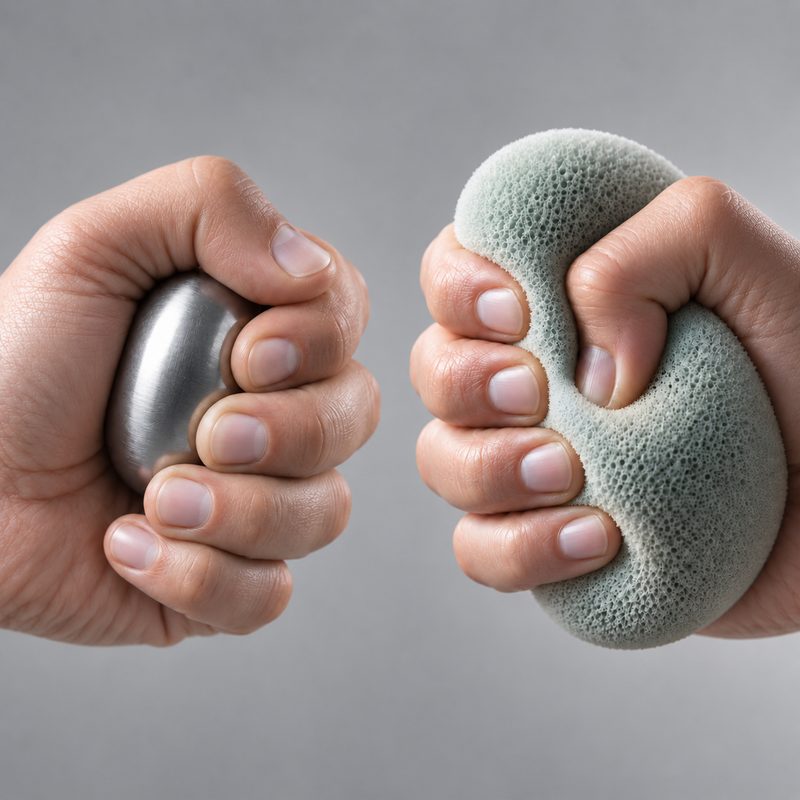
The Multidimensional Neural Haptics project is developing a new way to restore a sense of touch through noninvasive stimulation of peripheral nerves, allowing multiple types of sensory information to be delivered through a single stimulation site. The work has shown that users can independently perceive both the strength and rhythmic “flutter” of sensations, use these sensations to distinguish changes in sensory signals with higher information transfer than conventional approaches, and apply the feedback to identify the size and softness of objects using a sensorized prosthetic hand.
Recent studies have also demonstrated that individuals with upper-limb amputation can perceive these multidimensional sensations in their phantom limb and use them to perform object discrimination tasks. Together, these findings support the continued development of a practical sensory feedback system that could improve prosthetic function, reduce prosthesis abandonment, and help people interact more naturally with objects, tools, and digital environments.
Future prosthetic devices, virtual reality systems, teleoperation platforms, and wearable technologies may be able to communicate richer sensory information without requiring multiple stimulation sites or invasive implants. By carrying multiple streams of information through a single perceptual channel, multidimensional encoding represents a promising strategy for creating more intuitive and effective human-machine interfaces.