Mapping the Brain’s Response to Neuro-Haptics
Mapping the Brain’s Response to Neuro-Haptics
Research Team: Aliyah Shell, Ph.D., Ranu Jung, Ph.D., Andres Pena, Ph.D., Justin Asbee, Ph.D., James Abbas, Ph.D.
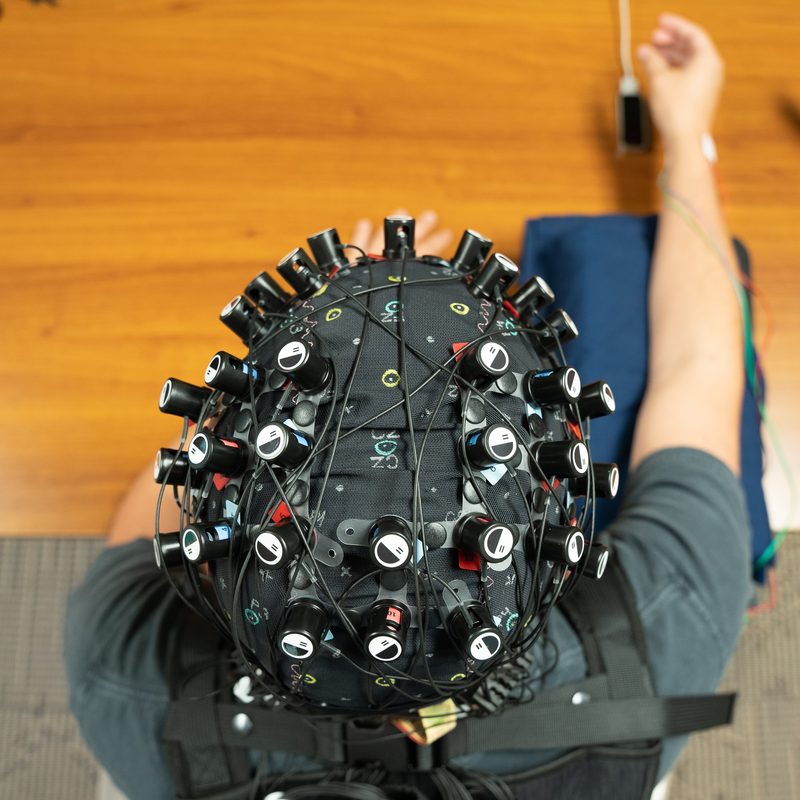
When touch is recreated using electrical stimulation of nerves, does the brain process it in a way that resembles natural touch? To answer this, this project uses functional near-infrared spectroscopy (fNIRS), a noninvasive imaging method, to track brain blood-oxygen changes associated with neural activity, to compare regional brain responses as participants interact with physical objects through natural touch and virtual objects with or without neuro-haptic feedback. In neuro-haptic feedback, touch is emulated when electrical stimulation of peripheral nerves evokes distally referred sensations in the areas innervated by those nerves.
Using the extended Touch (xTouch) neuro-haptic platform, participants explore and identify physical and virtual objects while stimulation evokes sensations referred to the areas normally served by the activated nerves. fNIRS sensors over the sensorimotor, somatosensory association, and prefrontal cortices reveal whether artificial touch recruits networks involved in tactile perception and where its cortical signature differs from natural touch.
Related sensorimotor studies examine whether neuro-haptic feedback changes brain activity during virtual-reality rehabilitation tasks. Participants perform real-world and virtual versions of clinically validated tests, with and without neuro-haptic feedback. Monitoring regions involved in movement, sensory processing, and cognitive effort shows how touch information affects cortical processing, sensorimotor integration, task performance, and presence in virtual environments.
Together, these studies establish fNIRS as a practical, noninvasive method for objectively evaluating artificial touch. The findings can guide more intuitive prostheses, more immersive virtual reality systems, and rehabilitation approaches that promote sensory re-engagement and neuroplasticity, while clarifying how closely neuro-haptic experiences approximate natural sensation. They also provide design targets for refining stimulation patterns, improving sensory realism, and reducing cognitive demand as neuro-haptic technologies move from controlled experiments toward everyday clinical and consumer use across diverse user populations.